The UN Application Process Nobody Talks About: A Step-by-Step Guide to Success
Chinenye Oguadinma
Published 6/9/2026
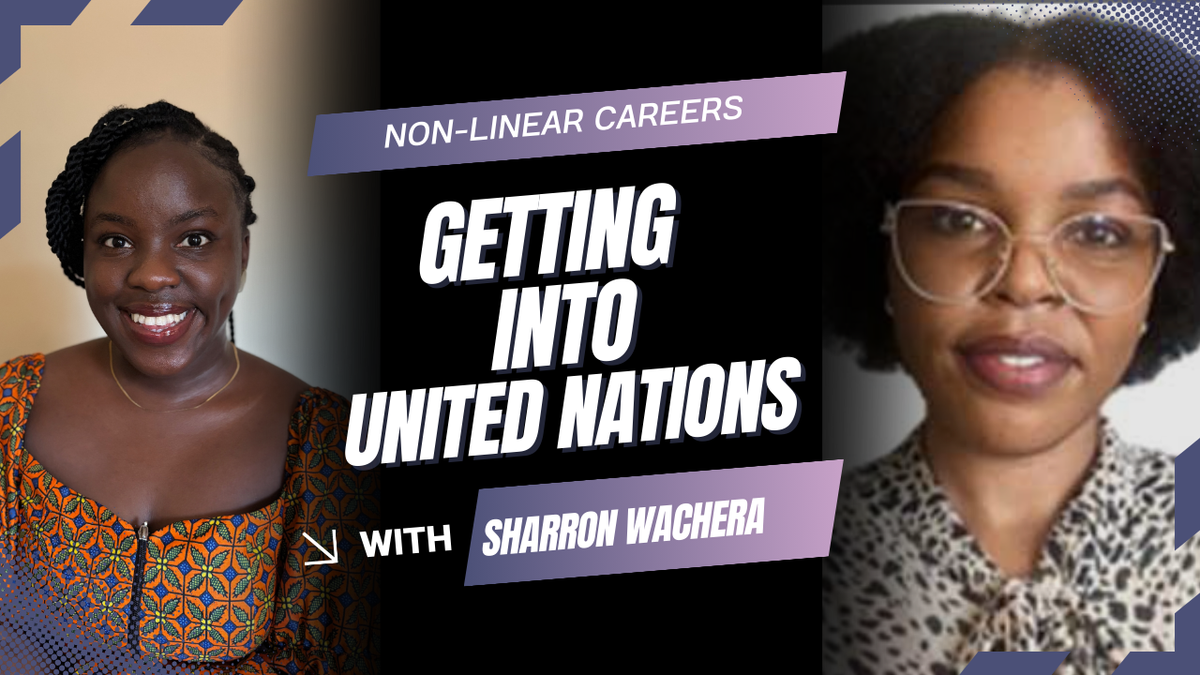
Have you ever looked at a career in the United Nations and thought, "That's only for a certain type of person"?
In our latest deep dive on Non-Linear Careers, I sat down with Sharon Wachera, a Learning and Development Consultant who has spent years within the UN system. Her story is a powerful reminder that there is no "traditional" path to global impact. From the coastal side of Kenya to coordinating capacity-building programs for UN staff worldwide, Sharon’s journey is packed with the kind of advice you won’t find in a standard job description.
Here is the step-by-step guide to the UN application process that nobody talks about.
Start Where You Are
A common misconception is that you need a decades-long resume to catch the UN’s eye. Sharon’s journey proves otherwise. Her path started in school, joining children’s rights clubs and later volunteering for the Children’s Rights Parliament in Kenya.
The Actionable Insight: Don't wait for the UN to hire you to start making an impact. Leverage school clubs, local NGOs, or community projects. As Sharon emphasizes, these early experiences provide the "proof of passion" that sets you apart during the internship application stage. If a club doesn't exist, be the one to start it.
Understand the Structure of the UN
The UN isn't just one giant office; it’s a vast ecosystem of organs, agencies, and programs (UNICEF, UNDP, UNCC, etc.), each with its own specific mandate.
The Strategy: Before applying, research the specific branch’s mission. For example, Sharon explains that when she applied to the UNCC, she had to understand their focus on agile learning and tailoring programs for UN staff. Generic applications are the quickest way to a rejection. You must tailor your story to fit the specific puzzle piece they are looking for.
3. Mastering the Application: Intentionality, Strategy, and Authenticity
With the rise of AI, it’s easy to generate a standard cover letter. However, UN recruitment teams are looking for three distinct pillars:
- Intentionality: Do you actually know what this role does? Don't just understand the UN Secretariat; understand the specific organ you are joining.
- Strategic Impact: In your CV, don't just list responsibilities (e.g., "I managed data"). Highlight results and practical examples (e.g., "I analyzed data to improve program efficiency"). This demonstrates how your experience will shape the value you bring to the UN.
- Authenticity: What is the unique professional story that only you can tell? Expressing your authentic self helps you stand out among thousands of applicants.
Handling Rejection
Sharon shared a surprising revelation: she was initially rejected for the very position that eventually became her entry point into the UN.
The Lesson: In the UN system, rejections are often just "redirections." The recruitment process is notoriously long and competitive. Persistence is a soft skill in itself. If you get a "no," use it to refine your story, strengthen your profile, and apply again when the role is re-advertised. As Sharon puts it, "I’d rather face a rejection in something that I was not meant to do... I call them redirection."
Skills That Actually Matter: Soft vs. Hard Skills
While hard skills are role-specific (like data analysis or professional writing), Sharon highlights two soft skills as non-negotiable:
- Adaptability & Continuous Learning: The UN values a "growth mindset." Even senior officials (P4/P5 levels) are expected to take new training. Showing that you are curious and coachable is often more valuable than being "perfect."
- Strong Communication: You will work in a multicultural melting pot. You must be able to listen actively and communicate your perspective clearly and respectfully across all professional levels—from fellow interns to Directors (D1).
Practical Tips for Your CV and Motivation Letter
- Motivation Letter: This is your space to correlate your skills with the job. Explain how your specific experiences will solve the agency's challenges.
- CV Structure: Keep it concise and avoid "bulky" descriptions. Use concrete examples of projects you helped coordinate or close.
- The Final Check: Sharon warns against the "speed trap." Prioritize quality over quantity. One typo in a course name can disqualify you. It is better to send three perfectly proofread, tailored applications than thirty rushed ones.
The Importance of the "Right" Team
Beyond just getting the job, Sharon emphasizes the value of the people you work with. She credits much of her growth to supportive mentors and colleagues (like her colleague Yasmin) who encouraged her confidence. When applying, consider not just the organization, but the type of team culture you want to contribute to.
Final Words
The journey to the United Nations is rarely a straight line. "Time is the answer," Sharon says. You cannot rush 20 years of experience if you are only three years into your career. Make the best out of the years you do have, stay grounded, and believe in the value you bring to the table.
Want to hear the full story? Watch the full interview for even more insights:
Stay tuned for Part 2.

Join the Non-Linear Community
Weekly frameworks for turning your diverse professional experiences into building something of your own.